Founder Story
The Inception of SAKAARA
The story behind SAKAARA: a Rwandan word for expansion, and the family, community and conservation commitments that shaped a lodge beside Volcanoes National Park.
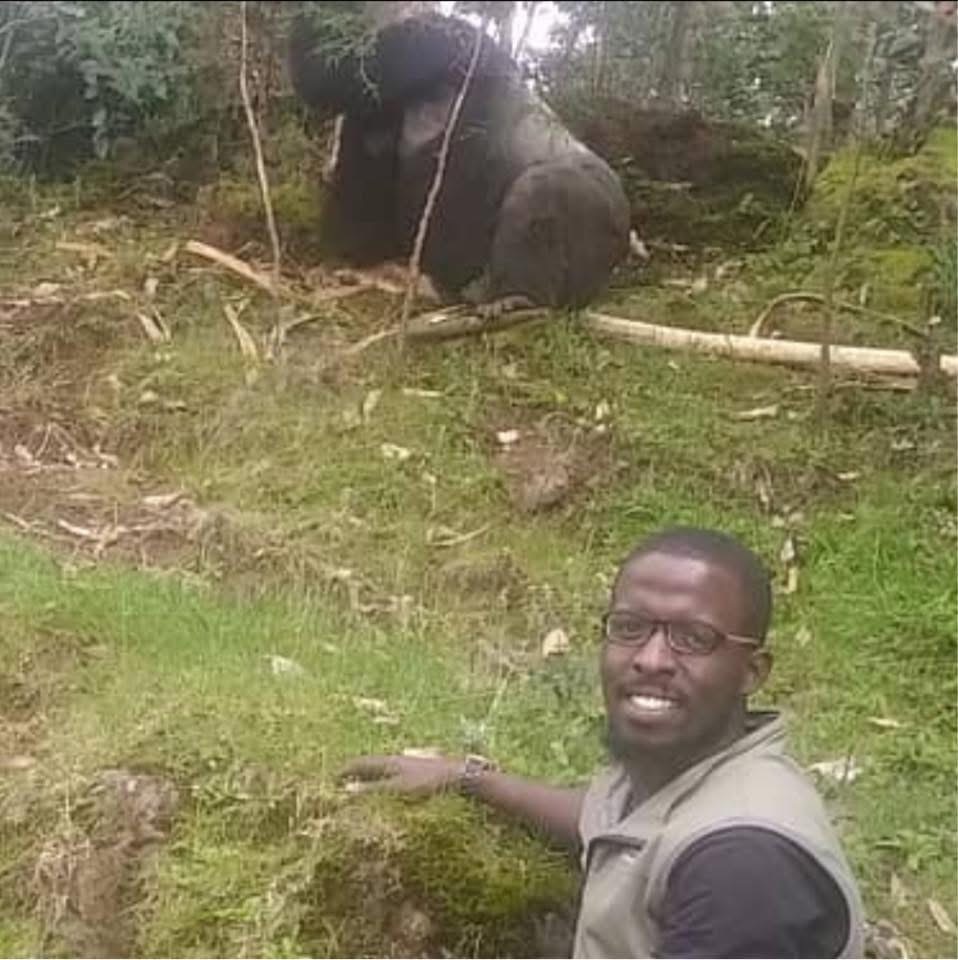
Isaac Semusatsi · Founder
People ask me where the name SAKAARA comes from.
It comes from a Rwandan word that means to expand — to live in abundance.
But a name is never just a word. This one is a story — and the story starts before I was born, in the voices of the people who raised me.
The inheritance of belief
My uncles fought to liberate this country. The government they fought had a doctrine, and it said it plainly: Rwanda is a small country. It is already full. It cannot feed everybody. That is why it turned on a part of its own people — told them they did not belong here, chased them from their own hills, and said they belonged elsewhere.
My father’s generation answered with a different belief: that there was room for everybody. Not just Rwandans — the whole world. The Rwandans who had fled never stopped dreaming of coming home, of living in a united Rwanda, of a country big enough in spirit to hold everyone. That dream was the fuel. It is what made men walk miles and miles through the jungle without food — discipline, and a cause: to protect people, to liberate a country, to live in harmony.
The first groups came from the Uganda side — from western Uganda, where I was born. They came through the Virungas: through Bwindi, then through Volcanoes National Park. And this is the part my father and uncles told me that I have never forgotten.
They passed through the gorillas’ home. At that time the gorillas were endangered and under threat — there was poaching, and the government of that time did nothing; in truth it stood behind it. The gorillas had learned to see humans as danger. Passing through their forest carried real risk.
But these fighters moved differently. Their discipline — the same discipline that would win the liberation — shaped how they approached the forest. They did not come as a threat. And the gorillas, somehow, understood. They let them in.
At night, high in the Virungas, the cold bites. But where the gorillas nested, the ground was warm — and the soldiers coming to liberate the country drew warmth from it. Not among the gorillas, but close by, sheltered by the same forest, warmed by the same ground.
My uncle never forgot that. He felt indebted to those gorillas for the rest of his life — because in the hardest nights of the hardest march, they shared their home and their warmth with men they had every reason to fear.
It wasn’t only the fighters who served. My mother was a nurse — or as much of one as the struggle allowed her to become, because she never got to finish school. During the fighting she treated the wounded soldiers, giving first aid and medical care with whatever she had. In my family, care was never a profession first. It was a duty.
That is why, when the new government came to power, conservation was a mandate from day one. Imagine it: a government with almost no resources, piecing together a country that had nearly been destroyed — and still, protecting the gorillas was a priority. That is unheard of. Conservation has been in the DNA of this government since the beginning, because the debt was personal.
It is also why Rwanda created Kwita Izina, the gorilla naming ceremony — first held in 2005. For one week every year, the whole community gathers, and on the main day, newborn baby gorillas are given names — by rangers, by local families, by people from around the world honored for their conservation work. It is a tribute. A way of saying: you sheltered us; now we shelter you.
The country I watched rebuild
I was born in western Uganda, near the Virungas, and I went to school there. But every holiday I came back to Rwanda — in the years just after the genocide. At first, what I felt was the sadness of the people. Then, year by year, I watched it change. I watched a country rebuild itself. And every time I go home now, I see it in people’s eyes: hope.
I grew up in an extended family. We shared the space we had, the food we had, even the bed. Sometimes three or four of us slept together. But the strongest memory is not of how little there was. It is of how happy we were together. We were brothers and sisters. It was simply home.
That is where I first learned resourcefulness: how to make what we had serve everybody. Long before I thought about a lodge, I understood that a small space could hold a large family. That understanding later shaped the way I designed SAKAARA—doing more with less, without losing the sense of belonging. We did not call it expansion then. We called it home.
My father later built a nursing school in western Uganda, near the Virungas — I remember him on the site with the builders, sleeves rolled up, building his own school with his own hands. About five years after it opened, the auditors came. They found that half the students were on full or half scholarships — and this was a for-profit school. Nobody had told him to do that. That’s where my instinct comes from: seeing where the community is missing out, and filling the gap. It’s in my DNA.
Expansion as giving
In January 2018, something happened that I didn’t know was shaping me. The African Wildlife Foundation handed 27.8 hectares to the Rwanda Development Board — the first expansion of Volcanoes National Park in more than three decades — in partnership with Wilderness Safaris. My tour company, the one I had started with my siblings, was hired to manage the handover event. We were only three or four years old as a company. I never saw that honor coming.
I wasn’t dreaming of a lodge then. But standing there, watching land being given back to gorillas — watching habitat expand — planted something in me. I saw how beautiful that act was: expansion, not as taking, but as giving.
I became a tour guide in 2014 — and that, too, came from family. Two close family friends, men I looked up to like uncles, used to take me to school. They became guides before me, and every day I watched them head out with tourists into the parks. That is where the dream started.
In those years I was a driver-guide, in and out of Volcanoes and Rwanda’s other parks, tracking gorillas again and again. I watched poaching fall to nearly zero. I watched the animals thrive — and I watched the communities around the park start to smile again, to hope again, to care for the wildlife as their own.
Participation, Not Charity
Then the big brands arrived — One&Only, Singita, Wilderness — and raised the bar for everyone. Their work for conservation and community is real, and I have learned from it. But I saw a gap none of them were built to fill: a place where the community is not only uplifted by the development, but inside it — owning a piece of it. That was the part I could play.
I had seen it work once. Smaller. With my own hands.
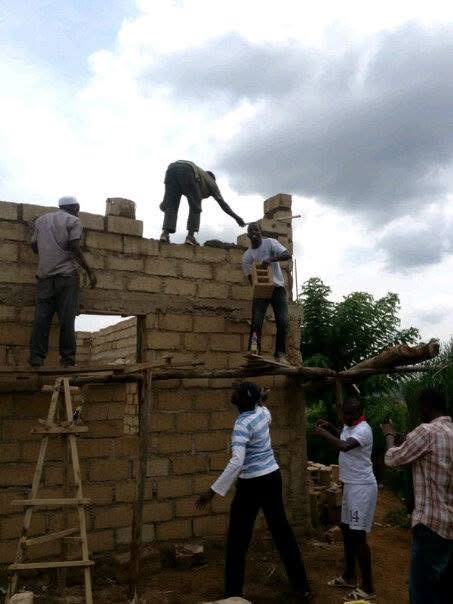
My first community project was a mosque. My family and our neighbors pooled what money we had and drove out every weekend to a village far from the city that needed a gathering place. We didn’t send money from the city. We showed up and built beside them: the mosque, clean toilets, a borehole so they would have water. Those weekends are among my fondest memories. They were the seeds of everything. Caring for a community isn’t a donation. It’s participation.
I have always loved art — design, making things. So I began to ask what a place built on participation would even look like. None of it began as business. It began as love looking for a shape — and the shape it found was a lodge. I had never dreamed of building a lodge, not in my wildest dreams. But it was a way to stay, to keep showing up. And whatever it became, it could never be just another lodge.
A friendship made it real. A park ranger I had trekked with for years believed in the vision when I shared it. The people there are protective of their land, as they should be — someone like me could never have bought there alone. He gave me the first piece of SAKAARA: his own land. Then he shared the vision with our neighbors, and they agreed to sell too, because they believed the land would be cared for. He had another property and moved there, but he was welcome to stay until his new house was ready, and he did. He still farms the land today. The land I buy; the community farms; what they grow feeds the lodge. It worked from the very first plot.
Those friendships kept compounding. The Muslim leader of the neighboring village — a friendship from my guiding years — began to share with me what his people were carrying: families who could not afford health care, mothers raising children alone, young people with no work to be found. We started there — health care first, for the families who had none — and a partnership grew that is still growing.
The community was never on the sidelines of their own story.
A Shared Landscape
You climb before the light does — mud, bamboo, breath loud at altitude. The hand that reaches back for you belongs to a man whose family has walked this forest for generations. Then a silverback’s unhurried glance, and you understand: this place was always shared. The only question is whether you’ll share it honestly.
You come down expecting a gate. There is none.
The farms along the path belong, in real part, to the families who work them. Your host trained a year to earn his place here. Nobody is performing welcome — they are receiving you into land they partly own. Not feeling part of it. Being part of it.
Your cottage is volcanic rock that was already waiting on this land. The shower closes around you as steam. The closet is a gallery — village-made pieces, each carrying its maker’s name; what you pay flows back to the family and the forest. The wardrobes stay hidden until you press one open. The sauna becomes the massage room. The plunge pool fits two. Only two. Nothing wasted; everything intended.
Tonight the couple beyond the lounge are strangers, and the room folds so completely around you that you’re alone in the world. Next season, bring your oldest friends — the same room becomes one fire, one table, one long evening. The architecture doesn’t change. It understands who you are to each other.
That’s the philosophy, built in stone and steam and shared land: luxury is not about more space. It is about more thought.
That is what SAKAARA means: expansion into sustained abundance — of the heart, big enough to welcome the whole world; of the mind, big enough to make room for everybody in a small space.
The Dian Fossey Gorilla Fund describes two separate habitats for the endangered mountain gorilla: the Virunga Massif and the Bwindi-Sarambwe region. The Virungas are one of only two places on Earth where mountain gorillas live in the wild. That rarity is not simply a reason to visit. It is a reason to care.
The gorillas, the forests, the waters and the communities around them are part of one connected ecosystem—and so are we. Protecting that home is a responsibility shared by all of us. The Virungas shaped my family’s story; building here means carrying that responsibility forward, so that the forest can flourish and the people who call it home can still belong.
And this is not just my philosophy — it is Rwanda’s. A small country that has never needed to take from others to be big. Big enough to be where the world meets.
In October 2026, Formula 1 announced a ten-year agreement for the African Grand Prix to join its calendar in the early 2030s, after a purpose-built circuit in Bugesera is completed. The name matters to me: the African Grand Prix, presented by Visit Rwanda. The whole continent’s name on the world stage, carried by the smallest country in the room. That is expansion as Rwanda understands it: not taking more, but making room for more.
That is what SAKAARA means to me: expansion into lasting abundance—not as having more, but as making room for more. We hope to build a place where hospitality, community partnership and care for the landscape belong together. That is the invitation behind SAKAARA, and the story I hope our future partners will see in it.
There is a saying: it is not the hand with more that gives, but the heart that gives. That is what we stand for. A sustainable legacy — because what is given from the heart does not run out.
That is SAKAARA. That is what we are building.